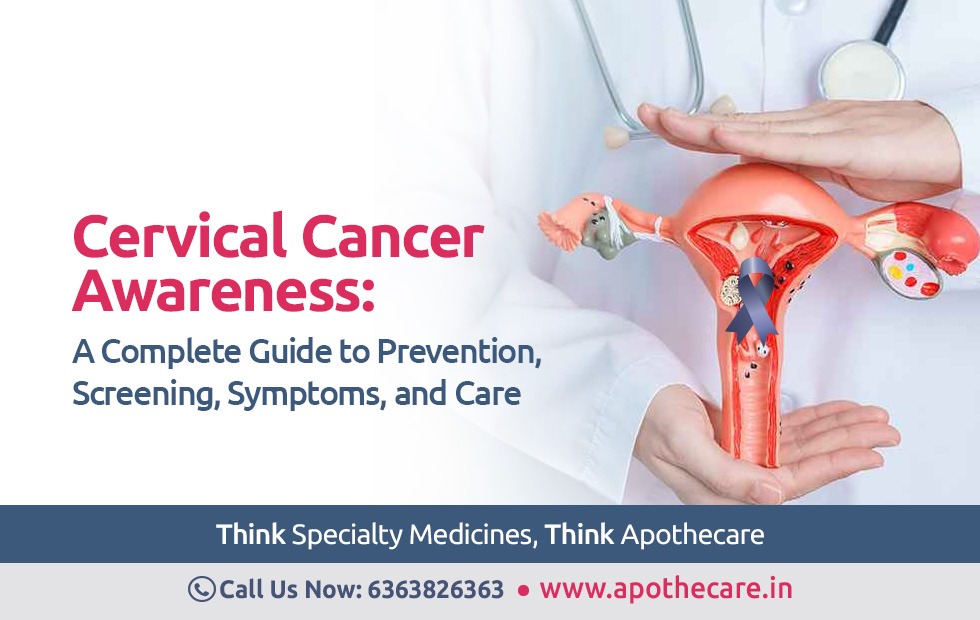
Cervical Cancer Awareness: A Complete Guide to Prevention, Screening, Symptoms, and Care
Cervical cancer is one of the few cancers that is largely preventable, yet it continues to impact the lives of thousands of women every year- especially in countries like India where awareness and routine screening are still limited. What makes cervical cancer particularly dangerous is not just the disease itself, but how quietly it can progress in the body without obvious warning signs.
At Apothecare, we believe that access to the right information is the first step toward better health outcomes.
Understanding Cervical Cancer:
Cervical cancer develops in the cervix, the lower, narrow part of the uterus that connects the uterus to the vagina. It usually grows slowly over time, beginning as abnormal cell changes known as precancerous lesions. These abnormal cells can take years to turn into cancer, which is why regular screening plays such a critical role in prevention.
In most cases, cervical cancer is caused by a persistent infection with certain high-risk types of Human Papillomavirus (HPV). HPV is extremely common- most sexually active individuals will be exposed to it at some point in their lives. While the body often clears the virus naturally, persistent infection with high-risk strains can lead to cellular changes that may eventually become cancerous if left untreated.
Why Cervical Cancer Awareness Is So Important:
One of the biggest challenges with cervical cancer is that it often shows no noticeable symptoms in its early stages. Many women feel healthy and delay screening, only to discover the disease when it has already progressed.
Cervical cancer awareness is crucial because:
-
Early-stage cervical cancer has a very high survival rate
-
Regular screening can detect abnormal cells before cancer develops
-
HPV vaccination can prevent the majority of cervical cancer cases
-
Delayed diagnosis often leads to more complex and aggressive treatments
Raising awareness helps normalize conversations around women’s health and encourages timely medical care—saving lives in the process.
Causes of Cervical Cancer:
The primary cause of cervical cancer is long-term infection with high-risk HPV types, particularly HPV 16 and HPV 18. However, not everyone with HPV develops cancer. Several factors influence whether an HPV infection progresses to cervical cancer.These include:
-
A weakened immune system that cannot clear the virus effectively
-
Lack of regular cervical cancer screening
-
Smoking, which damages cervical cells and weakens immune response
-
Long-term use of oral contraceptives (in some cases)
-
Early onset of sexual activity or multiple sexual partners
-
Poor access to healthcare and follow-up treatment
Understanding these risk factors helps women make informed lifestyle and healthcare decisions.
Signs and Symptoms of Cervical Cancer:
In the early stages, cervical cancer often does not cause any symptoms, which is why routine screening is essential. As the disease progresses, symptoms may start to appear.Common warning signs include:
-
Abnormal vaginal bleeding (between periods, after intercourse, or after menopause)
-
Unusual vaginal discharge that may be watery, thick, or foul-smelling
-
Pain during sexual intercourse
-
Pelvic pain or lower back pain
-
Menstrual changes that feel different from your normal cycle
These symptoms do not always indicate cancer, but they should never be ignored. Early medical consultation can rule out serious conditions and ensure timely treatment if needed.
Cervical Cancer Screening: Early Detection Saves Lives
Screening is the most effective way to prevent cervical cancer or detect it at an early, highly treatable stage.
Pap Smear Test:
The Pap smear (or Pap test) detects abnormal changes in cervical cells before they turn cancerous. It is a simple, quick procedure that can be done during a routine gynecological exam.
Who should get a Pap smear?
-
Women aged 21 to 65 years
-
Typically recommended every 3 years, or as advised by a doctor
HPV DNA Test:
The HPV test checks for the presence of high-risk HPV strains that are known to cause cervical cancer. It is often done along with the Pap smear for women above 30 years of age.
Regular screening allows doctors to monitor changes and intervene early—often before cancer ever develops.
HPV VAccination: Prevention at its best:
HPV vaccination is one of the most powerful tools available in the fight against cervical cancer. The vaccine protects against the most common cancer-causing HPV strains.
Who should get the HPV vaccine?
-
Girls and boys aged 9–14 years (most effective before exposure to HPV)
-
Women up to 45 years, after consulting a healthcare provider
The vaccine does not treat existing infections, but it significantly reduces the risk of future HPV-related cancers. Even vaccinated women should continue regular cervical screening, as the vaccine does not cover all HPV types.
Diagnosis of Cervical Cancer:
If screening results show abnormalities, doctors may recommend further tests such as:
-
Colposcopy (a detailed examination of the cervix)
-
Biopsy to confirm the presence of cancerous cells
-
Imaging tests to determine the stage of cancer
Early diagnosis allows for less invasive treatment and better long-term outcomes.
M-Strip - Supporting cervical cancer and HPV Diagnostics:
M-Strip is a diagnostic testing product used in clinical and laboratory settings to support screening and detection related to HPV infection and cervical health, as advised by healthcare professionals. Such diagnostic tools assist doctors in identifying infections or markers that may be associated with cervical abnormalities.
When used appropriately under medical guidance, diagnostic strips and test kits like M-Strip contribute to:
-
Early identification of infections
-
Faster clinical decision-making
-
Improved monitoring during screening or follow-up
-
Streamlined diagnostic workflows in healthcare settings
Note: It is important to note that diagnostic products are intended for professional or prescribed use and should always be interpreted by qualified medical practitioners.
Availability of M-Strip at Apothecare:
As part of its commitment to patient-first oncology and specialty healthcare, Apothecare ensures access to authentic, doctor-recommended diagnostic and oncology-related products, including M-Strip, through its trusted healthcare platform. By making essential diagnostic products available, Apothecare supports:
-
Doctors and laboratories in delivering timely diagnosis
-
Patients navigating cervical cancer screening and follow-up
-
Safe sourcing of genuine, quality-assured medical products
-
Reduced delays in care due to unavailability of critical supplies
Apothecare’s focus remains on reliability, transparency, and continuity of care, especially in sensitive areas such as cancer detection and women’s health
Treatment Options for Cervical Cancer:
Treatment depends on several factors, including the stage of cancer, overall health, and individual patient needs.Common treatment approaches include:
-
Surgery, especially for early-stage cervical cancer
-
Radiation therapy, often combined with chemotherapy
-
Chemotherapy to destroy cancer cells
-
Targeted or supportive therapies as part of comprehensive cancer care
When detected early, treatment is often simpler and more effective, with a higher chance of preserving quality of life.
Life After Cervical Cancer Treatment:
Recovery from cervical cancer involves both physical and emotional healing. Follow-up care is essential to monitor for recurrence, manage side effects, and support overall well-being.Women are encouraged to:
-
Attend regular follow-up appointments
-
Maintain a healthy lifestyle to strengthen immunity
-
Seek emotional and psychological support when needed
-
Stay informed and proactive about their health
Survivorship care is just as important as treatment itself.
How Apothecare supports Women fighting cervical cancer:
At Apothecare, we understand that a cancer diagnosis can be overwhelming—not just medically, but emotionally and logistically as well. Our mission is to make quality cancer care more accessible and less stressful for patients and caregivers. We support cervical cancer patients by:
-
Providing access to authentic, doctor-prescribed oncology medicines
-
Ensuring reliable and timely delivery of specialty cancer medications
-
Offering patient-first support throughout the treatment journey
-
Upholding transparency, quality, and compassion in every interaction
Breaking the silence around Cervical Cancer:
Cervical cancer is not just a medical issue—it is a social one. Cultural stigma, fear, and misinformation often prevent women from seeking timely screening or discussing symptoms openly.
By talking about cervical cancer, encouraging regular check-ups, and supporting preventive care, we can change outcomes for future generations.
Key Takeaways:
-
Cervical cancer is largely preventable
-
Regular screening can detect changes before cancer develops
-
HPV vaccination offers strong protection
-
Early detection leads to better treatment outcomes
-
Awareness and access to care save lives
Take Action Today:
Your health is worth prioritizing.
-
Schedule a Pap smear or HPV test
-
Talk to your doctor about HPV vaccination
-
Encourage the women around you to get screened
-
Share awareness and empower others
Together, we can reduce the burden of cervical cancer—one informed decision at a time.
References:
1.Berek & Novak’s Gynecology
Comprehensive reference on cervical cancer pathology, screening, diagnosis, and management in gynecological practice.
2.Gynecologic Oncology – edited by Jonathan S. Berek
Authoritative textbook covering cervical cancer staging, treatment protocols, and survivorship care.
3.DeVita, Hellman, and Rosenberg’s Cancer: Principles & Practice of Oncology
Internationally recognized oncology textbook detailing cancer biology, chemotherapy, radiation, and multidisciplinary care.
4.WHO Classification of Tumours of Female Reproductive Organs
Standard reference for histopathological classification of cervical and gynecologic cancers.
5.Clinical Gynecologic Oncology – edited by DiSaia & Creasman
Widely used academic textbook focusing on diagnosis, treatment, and outcomes in cervical cancer.
6.World Health Organization
Cervical Cancer: Prevention, Screening and Treatment Guidelines.
WHO guidelines on HPV vaccination, cervical screening intervals, and global elimination strategies.
7.Centers for Disease Control and Prevention (CDC)
Human Papillomavirus (HPV) and Cervical Cancer Prevention.
Evidence-based information on HPV transmission, vaccine safety, and screening protocols.
8.National Cancer Institute (NCI)
Cervical Cancer—Causes, Symptoms, Diagnosis, and Treatment.
Comprehensive cancer education and clinical overviews used by oncology professionals.