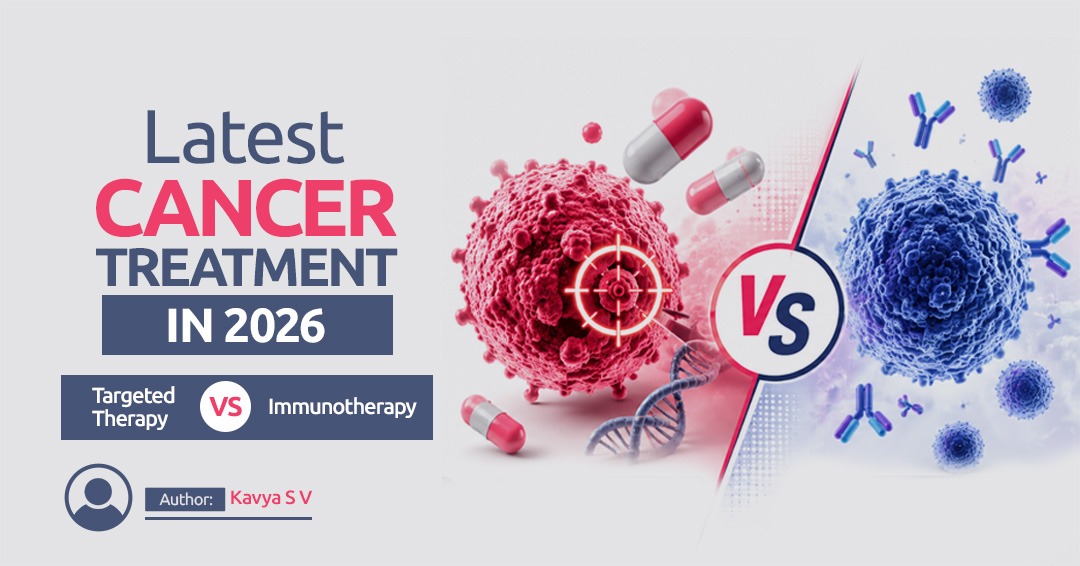
Latest Cancer Treatment in 2026: Targeted Therapy vs Immunotherapy
Do you know how much cancer treatment has progressed in recent years?
Chemotherapy and radiation, which frequently affected both healthy and malignant cells, were the mainstays of cancer treatment until recently.
Cancer treatment in 2026 is smarter, more accurate, and focused on improving patient outcomes while minimizing adverse effects.
Immunotherapy and targeted therapy medications are examples of innovations that are revolutionizing cancer treatment globally.
What is Targeted Therapy?
Targeted therapy is a modern cancer treatment that uses targeted therapy drugs designed to specifically attack cancer cells without harming most normal cells.
Targeted therapy works by identifying specific genes, proteins, or pathways involved in the cancer progression, whereas conventional chemotherapy targets both healthy and cancerous cells.
Types of Targeted Drug Therapy:
|
Type |
How they work |
Examples |
|
Tyrosine Kinase Inhibitors |
TKIs prevent proteins known as tyrosine kinases from transmitting signals that instruct cancer cells to proliferate, divide, and disseminate. Cancer cells could die if they do not receive this signal. |
Sunitinib, Gefitinib, Dasatinib |
|
Monoclonal antibodies |
These are synthetic proteins that attach to particular cancer cell targets. They can inhibit growth signals, identify cancer cells for immunological destruction, or deliver toxins directly to the cells. |
Trastuzumab, Bevacizumab |
|
Small molecule inhibitors |
These medications infiltrate cancer cells and inhibit internal signaling pathways that drive growth and survival, thereby stopping cancer progression. |
Imatinib, Erlotinib, |
|
Angiogenesis Inhibitors |
These medications prevent cancers from growing and spreading by inhibiting the development of new blood vessels (angiogenesis). |
Sorafenib |
|
Proteasome Inhibitors |
These drugs inhibit proteasomes, which causes proteins to build up inside cancer cells and ultimately results in cell death. |
Bortezomib |
|
Hormone receptor modulators |
These drugs inhibit the growth of hormone-dependent cancers, such as prostate and breast cancer, by blocking hormone receptors or lowering hormone production. |
Abiraterone ace |
|
PARP Inhibitors |
These drugs cause cancer cells to die by blocking DNA repair enzymes (PARP), particularly in tumors with defective DNA repair systems. |
Olaparib, Niraparib |
|
Signal transduction inhibitors |
These drugs prevent cancer cells from proliferating and surviving by blocking important signaling pathways including PI3K/AKT/mTOR. |
Everolimus, Alpelisib |
Benefits of Targeted Therapy:
-
More targeted treatment of cancer cells
-
Fewer side effects when compared to chemotherapy.
-
Useful in cancers caused by particular genetic mutations
Side Effects and Patient Care:
These therapies require careful monitoring:
-
Diarrhea
-
Skin changes
-
Liver function abnormalities
Proper patient care and monitoring are essential to manage these effects effectively.
What is Immunotherapy?
Immunotherapy is one of the most cutting-edge cancer treatments in 2026, allowing the body's immune system to recognize and destroy cancer cells.
Immunotherapy regulates or increases the immune response rather than targeting cancer directly.
Types of Immunotherapy Drugs:
|
Type |
How they work |
Examples |
|
Immune checkpoint inhibitors |
By blocking checkpoint proteins (such as PD-1, PD-L1, and CTLA-4) that cancer cells utilize to avoid the immune system, these medications enable T-cells to identify and eliminate cancer cells. |
Nivolumab, Pembrolizumab |
|
Car T-cell therapy |
T-cells from a patient are taken, genetically altered in a lab to better detect and attack cancer cells, and then returned into the body. |
Tisagenlecleucel, Axicabtagene ciloleucel |
|
Cytokine therapy |
Immune signaling proteins are used in these treatments to increase immune cell activation in the fight against cancer. |
Interleukin-2, Interferon alfa-2b |
|
Treatment Vaccines |
vaccines intended to strengthen the body's immunity against particular antigens found on cancer cells. |
Sipuleucel-T, BCG vaccine |
|
Monoclonal antibodies |
By focusing on particular antigens and selecting them for elimination, these antibodies aid the immune system in identifying cancer cells. |
Trastuzumab, Rituximab |
Benefits of Immunotherapy:
-
Prolonged reaction in certain types of cancer
-
Useful in cases of metastatic or advanced cancer
-
Able to produce long-lasting remission
Side Effects and Patient Care:
These therapies require careful monitoring:
-
Autoimmune reactions
-
Fatigue
-
Organ inflammation (Liver, lungs, thyroid)
Proper patient care and monitoring are essential to manage these effects effectively.
Which cancer treatment option is better?
There is no simple solution that works for everyone. The ideal cancer therapy choice is determined by:
-
Type and stage of cancer
-
Patients overall health
-
Genetic mutations
-
Previous treatments
Nowadays, doctors frequently combine immunotherapy and targeted therapy medications to enhance results.
Latest trends of cancer treatment in 2026:
The latest cancer treatment in 2026 is moving towards:
-
Personalized medicine based on genetic testing
-
Biomarker-driven treatment selection
-
Combination therapy ( Targeted + Immunotherapy)
-
Advanced cell therapies like CAR-T
-
Irreversible Electrophoration
-
Cryosurgical Ablation
-
Y-90 therapy
-
Hydrogen control cancer
-
Transarterial chemoembolization
-
Brachytherapy
Globally, these advancements are increasing survival rates and giving patients new hope.
Conclusion:
The benefits of immunotherapy and targeted treatment medications are compared to show how far oncology has come. These treatments are important cornerstones of the most recent cancer care available in 2026, providing more individualized and efficient cancer treatment choices than in the past.
These developments are moving us closer to more effective and less harmful cancer care, but selecting the best strategy still requires professional medical advice.
Get access to advanced cancer medications:
We at Apothecare Specialities are dedicated to providing patients and medical professionals with access to advanced cancer treatments. We offer a comprehensive choice of targeted treatment medicines and immunotherapy treatments, assuring timely and dependable patient care.
To know more or to explore our product range, visit Apothecare Specialities at: www.apothecare.in
FAQs:
1. What is the most advanced cancer treatment available in 2026?
Targeted therapy, immunotherapy, and personalized medicine based on genetic analysis are the newest cancer treatments available in 2026.
2. What advantages does immunotherapy offer?
Long-lasting responses, increased survival in certain cancers, and fewer common side effects are among the advantages of immunotherapy.
3. What are targeted treatment medications?
Drugs used in targeted therapy specifically target molecular pathways in cancer cells.
4. Targeted treatment or immunotherapy: which is better?
Depending on the patient's state, biomarkers, and the type of cancer, both are successful cancer therapy choices.
Reference:
-
Wu HC, Chang DK, Huang CT. Targeted therapy for cancer. J Cancer Mol. 2006 Apr 15;2(2):57-66.
-
https://www.cancer.org/cancer/managing-cancer/treatment-types/targeted-therapy.html
-
https://www.cancer.gov/about-cancer/treatment/types/targeted-therapies/approved-drug-list
-
https://www.cancer.gov/about-cancer/treatment/types/immunotherapy
-
https://iociindia.com/blogs/targeted-therapy-vs-immunotherapy-what-s-better