World Diabetes Day 2026: Why EarlyAction on Diabetes Matters
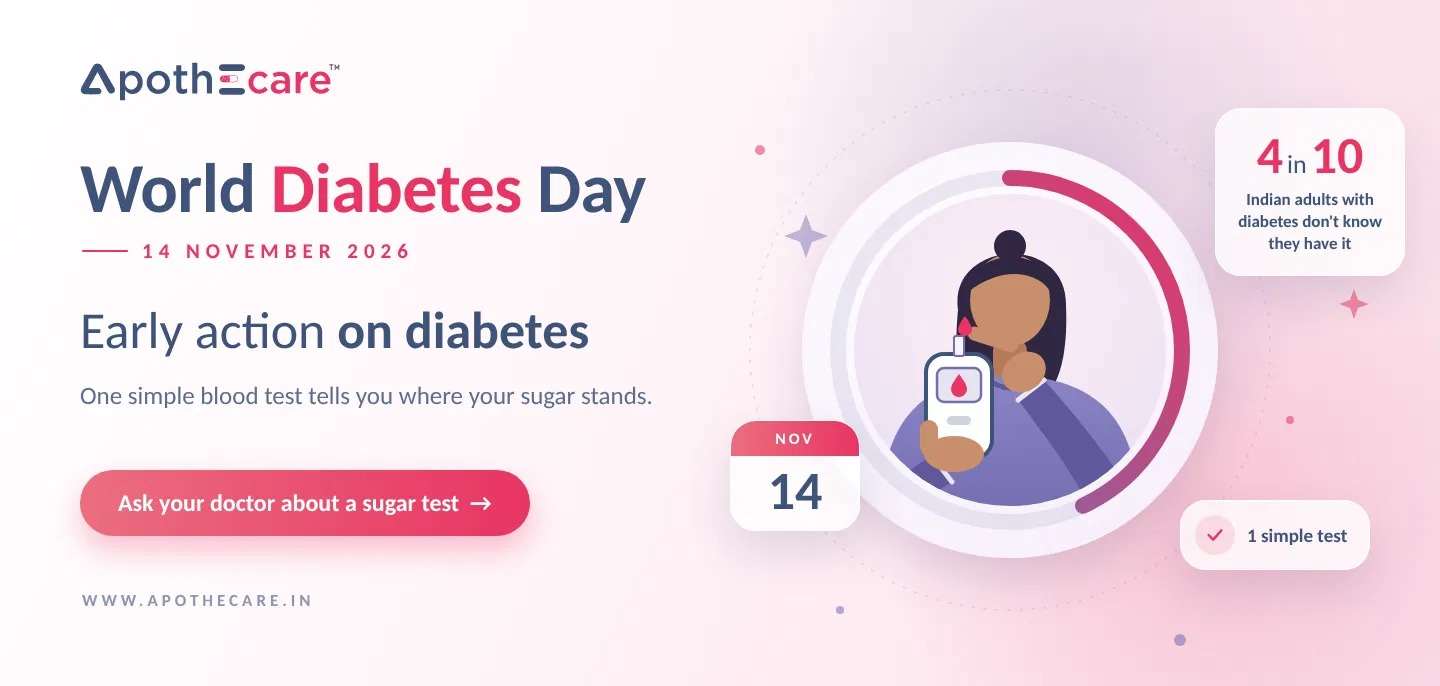
World Diabetes Day · 14 November 2026
World Diabetes Day falls on 14 November every year, and the theme for 2026 is "Early action on diabetes". For most of us, early action starts with one simple blood test. In India, about 43% of adults with diabetes (roughly 3.9 crore people) do not know they have it (IDF Diabetes Atlas, 11th edition).
This guide explains diabetes in plain words: what it is, why Indians are at higher risk, which tests find it, and which numbers to keep an eye on. It ends with answers to the questions people search for most.
Why 14 November?
The date is the birthday of Sir Frederick Banting, who discovered insulin with Charles Best in 1921. The International Diabetes Federation (IDF) and the World Health Organization (WHO) started the day in 1991, and the United Nations recognised it in 2006 (Vajiram & Ravi).
The 2026–27 campaign focuses on earlier diagnosis, timely care and lowering the risk of type 2 diabetes (IDF). WHO adds a fourth goal: reducing the stigma around diabetes (WHO).
What is diabetes, in simple words?
Your body turns food into glucose (sugar) for energy. A hormone called insulin works like a key that lets this sugar into your cells. In diabetes, the body either makes too little insulin or cannot use it well, so sugar builds up in the blood.
-
Type 1 diabetes: the immune system attacks the cells that make insulin by mistake, so the body stops making it.
-
Type 2 diabetes: the body does not use insulin well. About 90–95% of people with diabetes have this type (The Tribune).
-
Gestational diabetes: high blood sugar that first appears during pregnancy.
-
Prediabetes: blood sugar is higher than normal but not yet in the diabetes range. It is the early warning stage.
How common is diabetes in India?
India has the second-largest number of adults with diabetes in the world. Two large studies give the picture:
|
Measure |
Figure |
Source |
|---|---|---|
|
Adults (20–79 years) with diabetes, 2024 |
89.8 million, about 1 in 7 of all adults with diabetes worldwide |
|
|
Adults with diabetes who are undiagnosed |
43%, about 38.6 million |
IDF Diabetes Atlas, 11th ed. |
|
Expected adults with diabetes by 2050 |
156.7 million |
IDF Diabetes Atlas, 11th ed. |
|
People with type 1 diabetes, 2024 |
941,000, including 301,000 under 20 years |
|
|
People with diabetes (ICMR-INDIAB estimate for 2021) |
101 million (11.4%) |
|
|
People with prediabetes (ICMR-INDIAB, 2021) |
136 million (15.3%) |
ICMR-INDIAB |
The two estimates differ because they use different methods and age groups. Either way, the message is the same: diabetes is common, and many people have it without knowing.
Why do Indians get diabetes younger, and at a lower weight?
Many Indians look slim but carry extra fat around the belly and inside the body. Doctors call this the "thin-fat Indian" pattern. Research also suggests that many Indians make less insulin to begin with, so even a little extra fat can tip blood sugar over the edge (Diabetologia, 2022).
What this means in numbers:
-
In one study, Indians were diagnosed at a median age of 47–50 years, compared with 62 years in white Europeans in Scotland (Medicine Matters).
-
24–39% of Indians in that study had a healthy weight (BMI) when diagnosed, compared with 9.3% of white Europeans.
-
A UK Biobank analysis found that a South Asian with a BMI of 22 had the same diabetes risk as a white person with a BMI above 30 (medRxiv).
So "I am not fat, I can't have diabetes" is not a safe assumption. If diabetes runs in your family, ask your doctor about testing, whatever your weight.
What signs should you watch for?
The three classic signs are passing urine often, feeling very thirsty, and feeling very hungry. Other signs include tiredness, blurred vision, wounds that heal slowly, frequent infections, tingling in the hands or feet, and losing weight without trying.
Many people with type 2 diabetes have no signs for years. That is why a test matters more than waiting for symptoms.
Which tests find diabetes?
A simple blood test tells you whether your sugar is normal, in the prediabetes range or in the diabetes range. These are the cut-offs the American Diabetes Association uses (ADA):
|
Test |
What it measures |
Normal |
Prediabetes |
Diabetes |
|---|---|---|---|---|
|
HbA1c |
Average sugar over the last 2–3 months; no fasting needed |
Below 5.7% |
5.7–6.4% |
6.5% or above |
|
Fasting plasma glucose |
Sugar after at least 8 hours without food |
Below 100 mg/dL |
100–125 mg/dL |
126 mg/dL or above |
|
Oral glucose tolerance test (OGTT) |
Sugar 2 hours after a glucose drink |
Below 140 mg/dL |
140–199 mg/dL |
200 mg/dL or above |
|
Random plasma glucose |
Sugar at any time of day, with clear symptoms |
— |
— |
200 mg/dL or above |
A diagnosis usually needs a second test on another day, unless your sugar is very high or you have clear symptoms. Your doctor will read your results with you.
Each HbA1c result points to a different next step. A result in the diabetes range is confirmed with a second test before treatment is planned.

Myth or fact?
|
Myth |
Fact |
|---|---|
|
"Only overweight people get diabetes." |
Many Indians are diagnosed at a healthy weight because of the thin-fat pattern. |
|
"I feel fine, so my sugar must be fine." |
About 43% of Indian adults with diabetes don't know they have it. |
|
"Diabetes only affects older people." |
India has about 3 lakh children and teenagers with type 1 diabetes, and type 2 often starts in the 40s. |
|
"Prediabetes is nothing to worry about." |
It is the stage when action helps most. ICMR's chief has said prediabetes can be reversed with a healthy diet and physical activity (The Tribune). |
What can you do, starting this week?
-
Get tested. Ask your doctor whether an HbA1c or fasting sugar test is right for you, especially if a parent or sibling has diabetes.
-
Know your ABCs. If you already have diabetes, track your A1C, blood pressure and cholesterol (see the FAQ below).
-
Move every day. Walking, housework, dancing or sport all count.
-
Choose more fibre. Whole grains, dals, vegetables and fruit help steady your sugar.
-
Don't smoke. Smoking raises blood sugar, blood pressure and cholesterol (CDC).
-
Talk before you change. Speak to your doctor before you change your meal timings, try fasting or stop any medicine.
How is diabetes treated?
Treatment depends on your type of diabetes, your sugar levels and your other health conditions, so your doctor decides what is right for you. It can include lifestyle changes, tablets, injections, insulin, or a mix of these.
If you take diabetes medicines:
-
Take them exactly as prescribed, and don't stop or change the dose on your own.
-
Learn the signs of low sugar: shakiness, sweating, feeling nervous or anxious. Ask your doctor what to do if it happens (Second Harvest, citing ADA guidance).
-
Store insulin and injectables as the label says.
-
Keep a refill in hand so you never run out.
If your sugar is below 70 mg/dL, eat 15 g of carbohydrate, wait 15 to 20 minutes and check again. Repeat until it is back to 70 or above, and call your doctor if you still feel unwell.

You can browse prescription diabetes medicines on Apothecare's Antidiabetic medicines page. Order with a valid prescription, and ask your doctor which medicine is right for you.
Frequently asked questions
What are the 5 tests for diabetes?
The four main tests are HbA1c, fasting plasma glucose, the oral glucose tolerance test (OGTT) and random plasma glucose (ADA). The fifth one people usually mean is the glucose screening test done during pregnancy to check for gestational diabetes. If needed, your doctor may also order other tests to tell type 1 from type 2.
What are 10 facts about diabetes?
-
World Diabetes Day is on 14 November, Sir Frederick Banting's birthday. He co-discovered insulin in 1921.
-
About 1 in 9 adults worldwide (589 million) had diabetes in 2024 (Business Standard, on the IDF Atlas).
-
That number is expected to reach 853 million by 2050.
-
India has about 90 million adults with diabetes, the second-highest number after China.
-
About 43% of Indian adults with diabetes don't know they have it.
-
About 90–95% of people with diabetes have type 2.
-
India has about 9.4 lakh people with type 1 diabetes, including about 3 lakh under 20.
-
ICMR-INDIAB estimated 136 million Indians had prediabetes in 2021.
-
Many Indians get diabetes at a younger age and a lower weight than white Europeans.
-
Goa had the highest diabetes rate among Indian states in ICMR-INDIAB, at 26.4% (NMJI).
What are the ABC's of diabetes?
The ABCs are three numbers that help prevent diabetes problems such as heart attack and stroke (CDC):
-
A is for A1C, your average blood sugar over the past 3 months. The goal for many people is below 7%.
-
B is for blood pressure. CDC suggests below 140/90 mmHg unless your doctor sets a different goal.
-
C is for cholesterol. Ask your doctor what your LDL ("bad") cholesterol should be.
Many doctors add an S for stopping smoking. Your own targets may differ, so ask your doctor.
What is the 3-hour rule in diabetes?
There is no single official "3-hour rule". People usually mean one of two things:
-
Stop eating about 3 hours before bed. A small study in adults with overweight linked this habit, along with a longer overnight fast, to better blood sugar control (Dr Michael Roizen).
-
Eat every 3–4 hours. This advice helps some people on certain diabetes medicines avoid low sugar (Second Harvest).
The right timing depends on your medicines and sugar pattern. Check with your doctor before you change when you eat (diaTribe).
Which country is no 1 in diabetes?
By number of adults with diabetes, China is first with about 148 million, followed by India with about 90 million and the US with about 39 million (IDF Diabetes Atlas, 2024 figures) (The CSR Journal). Researchers expect Pakistan to overtake the US by 2050.
What is normal HbA1c by age?
For adults without diabetes, normal HbA1c is below 5.7% at any age. There is no separate "normal" for each age group (ADA). What changes with age is the target for people who already have diabetes:
|
Who |
Usual HbA1c target |
|---|---|
|
Adult without diabetes (any age) |
Below 5.7% is normal |
|
Most adults with diabetes |
Below 7% (CDC) |
|
Healthy older adults with diabetes |
Below 7.0–7.5% (ADA guidance) |
|
Older adults with several health conditions |
Below 8.0% |
Targets for older adults are gentler because very low sugar can cause falls and confusion. Your doctor will set the target that suits you.
What are the big 3 symptoms of diabetes?
The big 3 are known as the "three Ps":
-
Polyuria: passing urine often, especially at night.
-
Polydipsia: feeling very thirsty.
-
Polyphagia: feeling very hungry, even after eating.
If you notice these, see your doctor and ask for a blood sugar test.
Need help with your diabetes medicines?
Apothecare is an online pharmacy for specialty medicines. Upload your prescription at www.apothecare.in or call +91 6363826363, and our pharmacists will help you with your order. Browse our Antidiabetic medicines. Ask your doctor which treatment is right for you.
Disclaimer: Prescription medicine. For information only — not a substitute for medical advice.
Think Specialty Medicines, Think Apothecare
Last updated: 14 November 2026
References
-
Medical Dialogues: IDF Diabetes Atlas 11th edition, India takeaways
-
Business Standard: IDF Atlas in The Lancet Diabetes & Endocrinology